
Most automotive businesses in the GCC invest in a half-solution and then wonder why the attendance problem doesn’t go away. The truth is simple: a biometric device without a software solution is just a door log nobody reads. And a software solution without a biometric device is just a dashboard that trusts people to be truthful.
The Attendance Problem
Across workshops, service bays, PDI zones, and parts warehouses in the GCC, workforce management is one of the most operationally complex challenges a business can face. You are managing rotating shifts, weekend rosters, seasonal volume spikes, contract labor, and often dozens of staff spread across multiple branches and Emirates all simultaneously.
And yet, in many of these operations, attendance is still tracked on paper, WhatsApp messages, or Excel spreadsheets. The cost of this is not always visible on a single line of a P&L statement. But it compounds in every shift, every pay cycle, every month in ways that quietly drain profitability and management bandwidth.
- 45+ Minutes lost per manager per day chasing rosters manually.
- 23% Of overtime in manual operations is unverified at the pay cycle.
- 3x Longer payroll close when attendance is reconciled manually.
The solution to this problem exists, and it has two parts that must work together. Understanding why both are necessary, and why neither alone is sufficient, is the starting point for any automotive business serious about operational control.
What a Biometric Device Actually Does
A biometric attendance device is a physical terminal installed at a workplace entry point, a workshop gate, a service bay entrance, or a PDI zone checkpoint that verifies employee identity using unique biological identifiers: fingerprints, facial recognition, or both.
Its job is singular and critical: to verify that the person recording their attendance is physically present and is who they claim to be.
- Fingerprint and facial recognition that cannot be transferred, shared, or faked
- Tamper-proof timestamps recorded at the moment of physical presence
- Elimination of buddy-clocking — the practice of one employee clocking in for another
- Bay-level and gate-level logging that creates a precise location record
- Offline capability that continues recording even when internet connectivity is lost, syncing automatically when the connection is restored
Why This Matters in Automotive
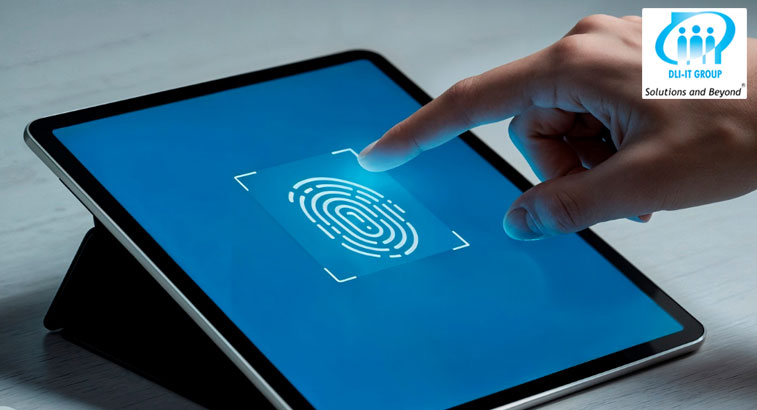
In a dealership or workshop with multiple service bays and shift rotations, a single unverified absence can mean a customer-facing bay running understaffed. By the time a manager realizes, it is 45 minutes into the shift. A biometric device surfaces that information at the point of entry, not at the point of crisis.
What a Software Solution Actually Does
The biometric device is smart because it includes time-and-attendance software. It takes verified punch data and turns it into useful operational outputs, such as live dashboards, automatic shift calculations, overtime reports, payroll-ready data, and real-time alerts.
Without the software, the biometric device produces data that goes nowhere. Without the device, the software displays information it cannot trust.
- Live attendance dashboard across all branches, bays, and locations on a single screen
- Automated overtime and shift calculation based on configured rules and GCC labour law
- Mobile check-in for PDI teams, delivery drivers, and field technicians who do not pass a fixed terminal
- Automated email and SMS notifications for roster gaps, late arrivals, and shift changes
- Payroll-ready reports that close cleanly without manual reconciliation
- Smart rostering that can build compliant shift plans in minutes, not hours
Why this matters in automotive
A workshop manager overseeing three locations cannot physically be in all three at once. A software solution acts as their eyes across the entire operation, surfacing who is present, who is late, where the gaps are, and what the cost implications are, all before the first customer arrives.
The Specific Challenges of the Automotive Industry
Generic HR tools were built for offices. An automotive distributor’s workforce management requirements are fundamentally different — and the solution must be built to match.
Multiple shift patterns across a single day
A typical automotive service centre may run early, standard, and late shifts across the same bays, with technicians, advisors, and cleaners operating on entirely different time schedules. A biometric device at each entry point captures all of these accurately; the software interprets each punch against the correct shift rules automatically.
Mixed workforce types
Permanent employees, contracted technicians, manufacturer-deployed service staff, and temporary workers may all be present on the same day. Each carries different overtime rules, different leave entitlements, and different payroll calculations. A software solution configured for this complexity handles each category correctly — and the biometric device makes no distinction, ensuring all are logged equally.
Field and mobile staff
PDI teams, delivery drivers, and off-site technicians cannot always access a fixed biometric device. Modern software solutions resolve this through GPS-verified mobile check-in — the employee registers via their smartphone, with their location logged against the designated work site. The integrity of the record is maintained without requiring physical hardware at every location.
High-volume peak periods
Model launches, service campaign activations, end-of-year sales periods, and post-holiday service backlogs create irregular staffing demands that are nearly impossible to manage manually across multiple branches. Smart rostering within the software solution — fed by accurate historical attendance data from biometric devices — allows managers to plan and adapt in real time.
A Decade of Proof in the GCC
2 of the GCC’s Top 10 automotive distributors have been running on our attendance solution for over a decade. Zero overtime disputes. Payroll closing in hours, not days. Full visibility across every branch from a single screen. Not because the system was pitched to them, but because it was built for how they actually operate.
Frequently Asked Questions
Everything automotive HR managers and operations directors ask us about biometric attendance devices and software solutions in the GCC.
Why is a biometric device not sufficient to control attendance in automotive workshops alone?
The biometric device records the correct data on punch-in and punch-out. In the absence of a related software solution, such data is isolated and underutilized. Raw logs are difficult to interpret and generate reports, and it is difficult to monitor attendance patterns across shifts and locations using them. Decisions must be made on the spot in a busy workshop. An isolated system will not be able to bring out patterns of absenteeism, compute overtime, and connect to payroll systems.
How can a biometric device used with a software solution enhance the accuracy of the workforce?
A biometric device can be incorporated into a whole workforce management system when it is coupled with software. The machine will take proper measures by verifying the identity and the software will convert this information into practical insights. It uses preprogrammed shift policies, auto-computes working hours, marks late arrivals, and creates real-time dashboards. Having this combination removes human error, creates uniformity in data interpretation and gives a single source of truth. The managers have immediate access to attendance in all locations, enabling them to respond swiftly and ensure the efficiency of the workforce.
What are the usual attendance issues experienced by automotive workshops in the GCC?
The GCC auto workshops are faced with a complicated workforce structure. These are rotating shifts, multi-location operations and contract labor. With manual tracking systems, it is hard to track overtime, last-minute absences, and to coordinate employees in different branches. These challenges cause payroll mistakes, a lack of productivity, and poor planning of the workforce.
What are the advantages of attendance software in eradicating payroll errors and overtime requests?
Attendance software automates the entire process of calculations. It applies predetermined policies to control shifts, overtime and labor rules, in such a way that there is no hour missed or recorded in the wrong category. This eliminates speculation and physical reconciliation of the payroll cycles. Transparent records and detailed reports provide easy verification of attendance data by both employees and managers. Payroll teams are also able to close the cycles more efficiently as they have faster processing times and enhanced accuracy.
Is it possible to track the attendance of field staff using a biometric software solution?
Yes, attendance software today can track mobile and remote workforces. The field personnel can report in with their smartphones, and the GPS verifies that the personnel are at the right place. This is particularly helpful when the user is a PDI team, delivery driver, or off-site technician, who do not have any interaction with fixed biometric terminals. The system logs their attendance in real time and combines it with the overall workforce data. This provides maximum visibility, irrespective of the location of employees working.
What are some of the ways through which biometric systems deter buddy-clocking?
Biometric systems use fingerprints or facial recognition. One cannot share or copy them, and as a result, workers cannot clock in on behalf of another. Each record of attendance is linked to a verified individual and timed on entry.